
By Discover the Riverland · · 6 min read
In 1887 George and William Chaffey signed on to build Australia's first irrigation colony at Renmark. Their company failed; their idea built a region. The whole Riverland is the Chaffey map, still legible 140 years on.
Two Canadians and a dry colony
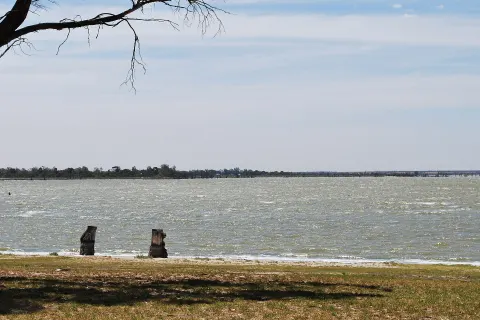
In the mid-1880s the land that would become Renmark was saltbush and red sand on a big bend of the Murray - beautiful, and to colonial eyes, useless. Less than 250 millimetres of rain fell in a good year. What changed everything was a meeting on the other side of the Pacific: the Victorian politician Alfred Deakin, touring California's new irrigation settlements, met George and William Chaffey, Canadian-born engineers whose watered colonies at Etiwanda and Ontario had turned Californian scrub into orchards.
Deakin invited them to Australia. After negotiations on both sides of the Murray, the brothers signed with South Australia in 1887 to establish an irrigation colony at Renmark - the first in Australia - while simultaneously launching its twin at Mildura in Victoria. A third brother, Charles, came out to manage the Renmark venture, building the log homestead now preserved as Olivewood in 1889 and planting the olive grove that still surrounds it.
Pumps, channels and promises
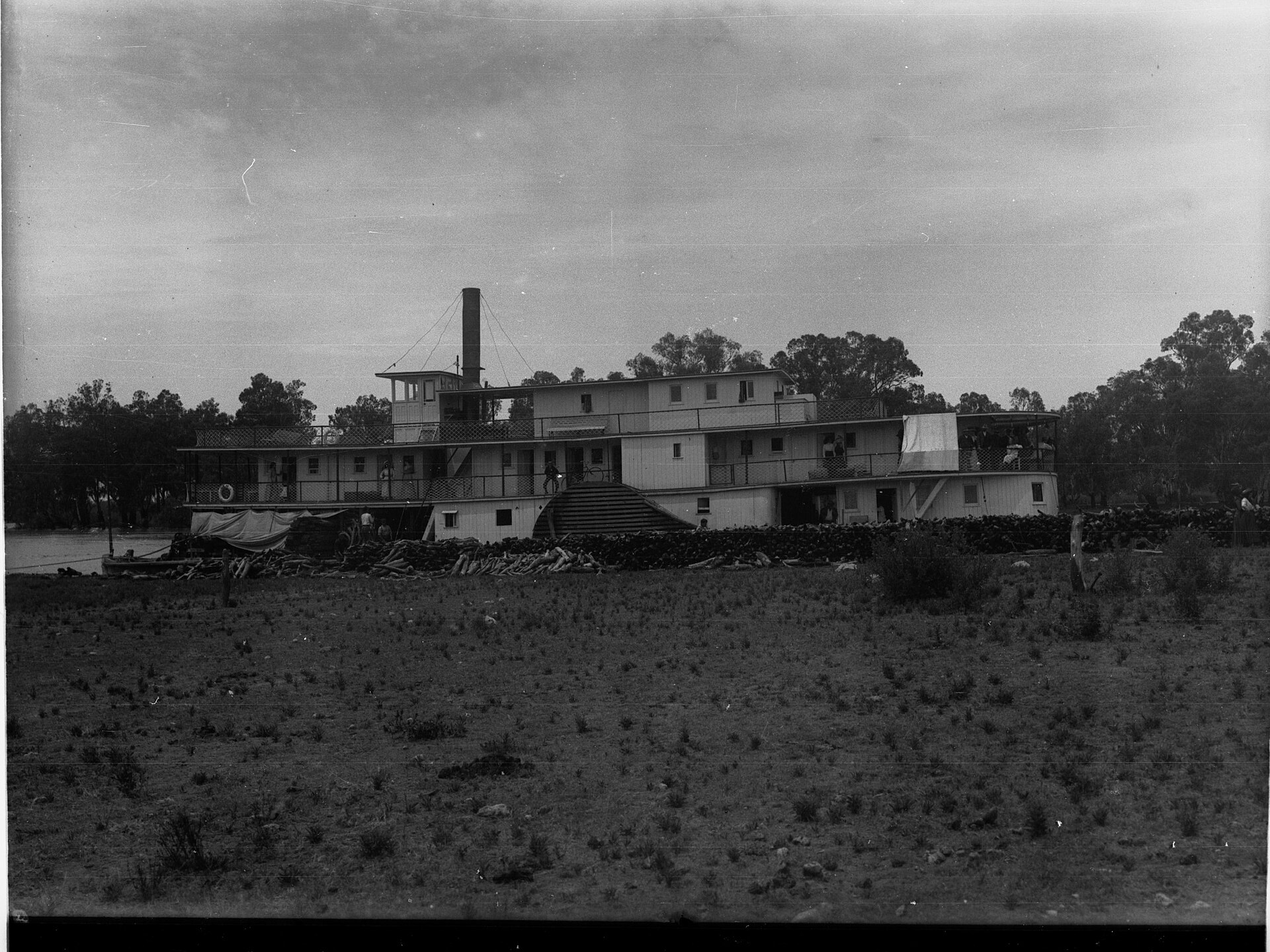
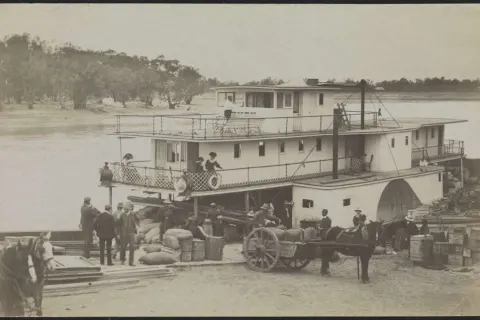
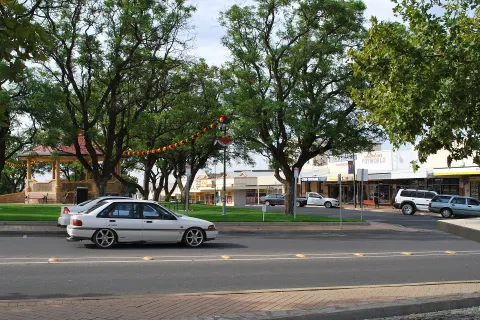
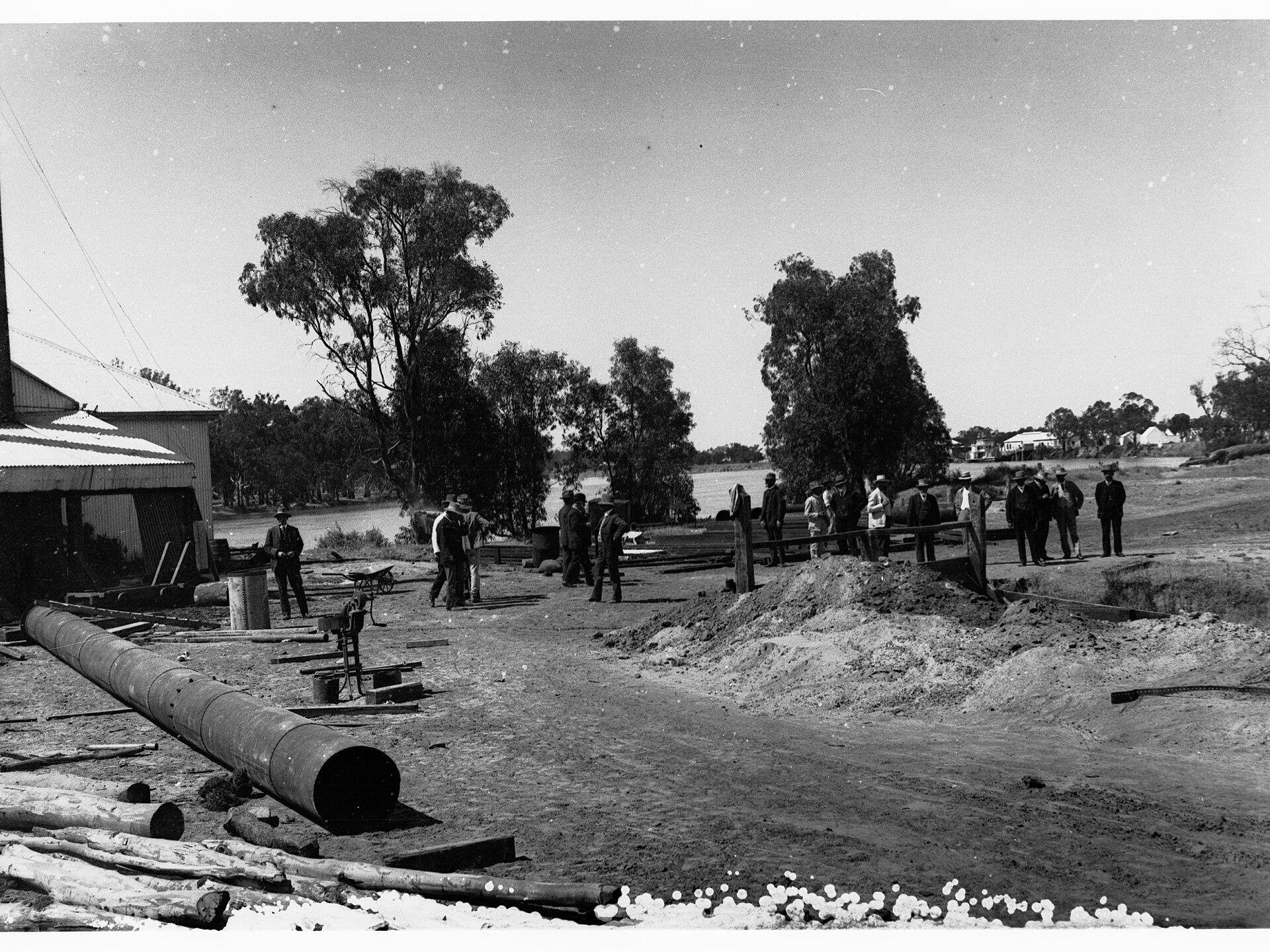
The Chaffey scheme was audacious in the way only nineteenth-century engineering could be. Steam pumps lifted river water into channels; channels fed it across survey-ruled fruit blocks; and promotional pamphlets fed an even bigger dream to investors and settlers across the Empire. Renmark's first blocks sold quickly, vines and citrus went in, and the town that grew along the Renmark riverfront acquired streets, stores and, in time, one of the colony's odder institutions - a community-owned hotel.
Then came the 1890s. Depression dried up capital, drought and pests savaged early plantings, and the Chaffey companies collapsed in the middle of the decade. George went back to North America; William stayed at Mildura and rebuilt his reputation; Charles eventually left Olivewood. It looked, briefly, like the whole experiment might fail with them.
The settlers keep the water running
It did not fail. Renmark's irrigators took the scheme into their own hands, forming the Renmark Irrigation Trust in 1893 - community management of the pumps and channels that has continued, in evolving form, ever since. The orchards matured, the fruit industry found its markets, and the model the Chaffeys had imported was copied and adapted up and down the river, from the village settlements of the 1890s to the great soldier-settlement schemes that built modern Loxton and Cobdogla.
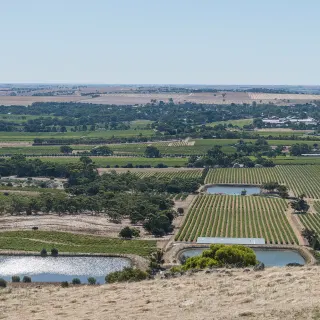
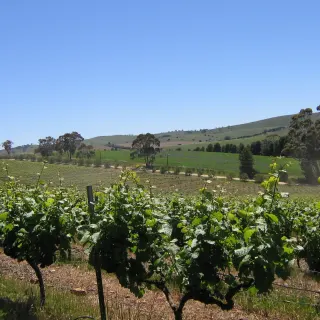
The Riverland you drive through today - the geometry of vines and citrus against mallee, the towns spaced along the river like beads - is the Chaffey map, still legible after nearly 140 years.
Reading the story on the ground
Start at Olivewood, where the National Trust keeps the family's world intact down to the printing presses. The settlement story continues at the Loxton Historical Village. And in Renmark itself, the brothers' name is everywhere - most visibly on the Chaffey Theatre, where the town they conjured out of saltbush now watches touring shows in air-conditioned comfort.